
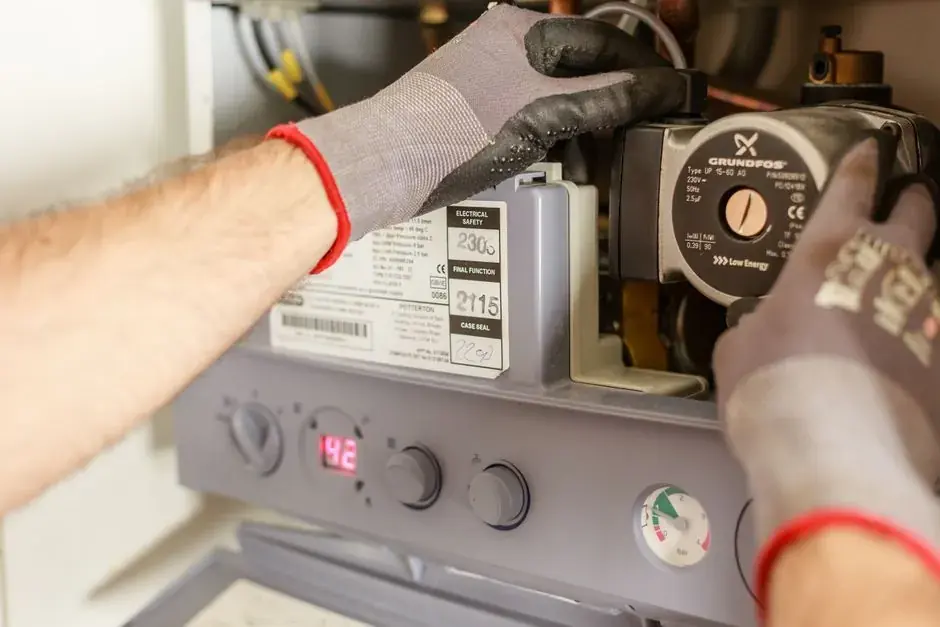
Learn what banging, humming, whistling, gurgling, and clicking can mean in a boiler or hydronic heating system.
Boiler noises can point to air, pressure, circulation, burner, pump, or control problems. The sound pattern matters.
Short answer
A noisy boiler is usually a symptom, not the diagnosis. Banging may involve trapped air, steam issues, pressure changes, or delayed ignition. Humming can come from pumps, relays, transformers, or burner components. Gurgling often points toward air or circulation. Whistling can involve flow restriction, valves, or pressure.
Repeated clicking can be an ignition or control sequence issue.
The safest first step is to note the sound, when it happens, and what the heating system is doing at that moment. Do not open burner compartments, bypass controls, or ignore alarms.
If the noise comes with a fuel smell, carbon monoxide alarm, visible water, severe overheating, or electrical burning smell, stop using the system if directed by safety guidance and contact appropriate help.
Banging or knocking
Banging can have several causes. In hot-water systems, air pockets, rapid pressure changes, loose piping, or flow stopping suddenly can create noise. In steam systems, water trapped where steam should move can cause loud hammering. Delayed ignition can also create a sharp bang when fuel lights late, which requires prompt professional attention.
Tell the provider whether the bang happens at startup, shutdown, during circulation, or only when a specific zone calls. If the sound is near radiators or baseboards, the distribution system may be involved. If it is inside the boiler cabinet, burner or internal component checks may be needed.
Humming, buzzing, or vibration
A steady hum may come from a circulator pump, transformer, relay, gas valve, oil burner motor, or control component. Some operating sound is normal, but a new or louder hum deserves attention. A pump that hums but does not move water may be stuck, air-bound, or electrically troubled.
Vibration can travel through piping and make the source hard to locate. Ask the provider to check the equipment while the sound is happening if possible. Video or audio captured from a safe distance can help, but it should not replace on-site diagnosis.
Gurgling or rushing water
Gurgling often suggests air in the system or uneven flow. It may appear after service, pressure changes, filling, or component replacement. Air problems can also make radiators partly cold, baseboard loops noisy, or pumps sound rough. Repeated air symptoms should lead to a check of pressure, air elimination, leaks, and fill components.
For symptoms that combine noise with cold rooms, see radiator and baseboard heating repair and circulator pump repair.
Whistling, squealing, or high-pitched sounds
High-pitched sounds can come from flow restriction, valves, burner operation, fan components, or pressure-related conditions. Because the cause varies by boiler type, avoid adjusting valves at random. Changes can hide the symptom temporarily while creating new imbalance.
If the noise appears with rising pressure, relief valve discharge, or water near the boiler, review leak and pressure repair. Pressure behavior is an important clue.
Clicking or repeated ignition attempts
Clicking during startup may be normal for some ignition sequences, but repeated clicking without stable firing can indicate pilot, igniter, flame sensor, gas valve, or control issues. The system may lock out after several failed attempts. Repeated resets are not a repair.
For this pattern, see pilot light and ignition repair. Tell the provider whether you see an error code, whether the burner lights briefly, and whether the issue happens every call or intermittently.
How to prepare for a repair call
Write down the sound, location, timing, affected zones, pressure reading if visible, and recent changes. Keep the area around the boiler clear. If the system serves tenants or multiple rooms, arrange access to the spaces where the noise occurs. Good observations help a provider find the cause faster and avoid unnecessary parts.
When noise points to distribution instead of the boiler
Many heating noises seem to come from the boiler because the boiler is the most obvious piece of equipment, but the sound may start elsewhere. Baseboard covers can tick as they expand. Radiator vents can hiss or spit. Pipes can move against framing. A zone valve can click repeatedly.
A pump can transmit vibration through the piping. The location and timing of the sound matter as much as the sound itself.